Material reference
Metallurgy Compare the metals and related materials in the collection. Select a name to jump to its profile.
Density is approximate and depends on the grade or composition. For ranges, density sorting uses the lower end. Relative cost uses the collection’s $–$$$$$ scale, not market pricing. Hardness is not ranked across test scales.
Swipe to compare all columns.
Material Family Density (g/cm³) Relative cost Hardness / wear Corrosion / finish Element / alloy family 2.70 (pure Al) $ Pure aluminum is relatively soft; alloy and temper can raise strength. A passive oxide protects the surface. Hard anodizing is a surface treatment, not bulk hardness. Alloy family ≈8.53 (C26000 example) $ Hardness and strength vary by zinc content, grade and temper. Brass can tarnish and develop patina; the environment matters. Element 8.96 (pure Cu) $$ Pure copper is relatively soft; temper and work hardening change its response to dents and scratches. Patina is expected under many exposure conditions and is not a fixed color or timeline. Patterned steel family ≈7.8 (Airtable steel-family baseline) $$$ No single hardness. Grade pairing and heat treatment govern hardness and toughness. Carbon and stainless varieties behave differently; the name alone does not establish corrosion resistance. Branded stainless patterned steel ≈7.8 (steel-class; verify exact product) $$$$ Heat-treatment dependent; consult the product datasheet rather than assigning a single hardness. Stainless grades are corrosion resistant, not corrosion-proof. Patterned metal laminate Varies / not listed $$$$ Hardness and density depend on layers and their proportions; a copper-rich piece is not representative of all mokume. Copper alloys may darken with handling; each layer and any intentional patina can age differently. Titanium laminate ≈4.5 (Airtable estimate for titanium-based versions) $$$$$ No single hardness; titanium grades, layer proportions and finishing vary. Titanium-based layers are generally corrosion resistant; that does not guarantee an unchanging decorative finish. Powder-metallurgy stainless steel 7.4 (Crucible/Niagara datasheet) $$$ Vanadium carbides contribute to wear resistance; part hardness depends on heat treatment. Stainless, not stain-proof. Datasheet performance cannot establish treatment of a specific part. Alloy family ≈7.8–7.9 (representative steel range; 304 example 7.9) $ Hardness spans grades and heat-treatment states. A 304 example is not proof the item is grade 304. Chromium passivation helps resist corrosion; exposure and grade matter. Multimetal composite Varies / not listed $$$$$ The matrix and filaments can react differently to wear; billet composition and density are not verified. Copper phases can patinate. The name does not imply room-temperature superconductivity or identify the exact filament alloy. Branded patterned titanium family ≈4.5 (Airtable titanium-laminate estimate, not all variants) $$$$$ No single hardness; layer grades and proportions are not known from the gallery name. Titanium layers generally resist corrosion; appearance depends on the chosen surface treatment. Element / alloy family 4.506 (pure Ti) $$ Strength and hardness depend on alloy and processing; no default Grade 5 assumption. A passive oxide helps resist corrosion. Color/finish and scratch behavior vary. Element / alloy family ≈19.3 (pure W) $$$ Heaviness is not the same as hardness. Tungsten metal, heavy alloy, and tungsten carbide are different materials. Do not infer composition, impact resistance or corrosion performance for a particular piece from the element label. Element / alloy family 6.52 (pure Zr) $$$ The oxide finish is a surface layer, not a measurement of the bulk material. Scratch behavior depends on finish. Zirconium can form a protective oxide; avoid claims of immunity to chemicals or wear. Zirconium–titanium laminate ≈5.5 (Airtable estimate); one supplier example ≈4.99 $$$$$ Composition and surface finish vary; no universal density or hardness applies. Oxide and color behavior can differ by layer. No blanket corrosion immunity.
Look side by side Both can show layered patterns. This example contrasts copper-rich Mokume-gane with a zirconium–titanium laminate. Color and pattern alone don’t identify the material.
Look closer
Material profiles A light metal used where low carry weight matters.
See 2 devices with this material
Aluminum foil, a familiar rolled finish. · Jurii · Wikimedia Commons · CC BY 3.0 · Resized
Relative cost $
Density (g/cm³) 2.70 (pure Al)
Hardness / wear Pure aluminum is relatively soft; alloy and temper can raise strength.
Corrosion / finish A passive oxide protects the surface. Hard anodizing is a surface treatment, not bulk hardness. Sources: Royal Society of Chemistry: Aluminium
Copper-zinc alloys with golden color and a heavier feel than titanium.
See 3 devices with this material
Brass is the center machined cube. The other pieces are zinc and copper. · Splarka · Wikimedia Commons · Public domain · Resized
Relative cost $
Density (g/cm³) ≈8.53 (C26000 example)
Hardness / wear Hardness and strength vary by zinc content, grade and temper.
Corrosion / finish Brass can tarnish and develop patina; the environment matters. Sources: Copper Development Association: C26000
Dense, reddish metal that develops a visible patina with exposure and handling.
See 4 devices with this material
Copper nugget, before a polished EDC finish. · Jurii · Wikimedia Commons · CC BY 3.0 · Resized
Relative cost $$
Density (g/cm³) 8.96 (pure Cu)
Hardness / wear Pure copper is relatively soft; temper and work hardening change its response to dents and scratches.
Corrosion / finish Patina is expected under many exposure conditions and is not a fixed color or timeline. Sources: Royal Society of Chemistry: Copper
A broad label for patterned steel. Modern pattern-welded products use layers with visible contrast.
See 1 device with this material
Modern 1080 / 15N20 pattern-welded Damascus, not historical wootz or Damasteel. · Fluzwup · Wikimedia Commons · CC0 1.0 · Resized
Relative cost $$$
Density (g/cm³) ≈7.8 (Airtable steel-family baseline)
Hardness / wear No single hardness. Grade pairing and heat treatment govern hardness and toughness.
Corrosion / finish Carbon and stainless varieties behave differently; the name alone does not establish corrosion resistance. Sources: Damasteel: traditional versus powder-based process
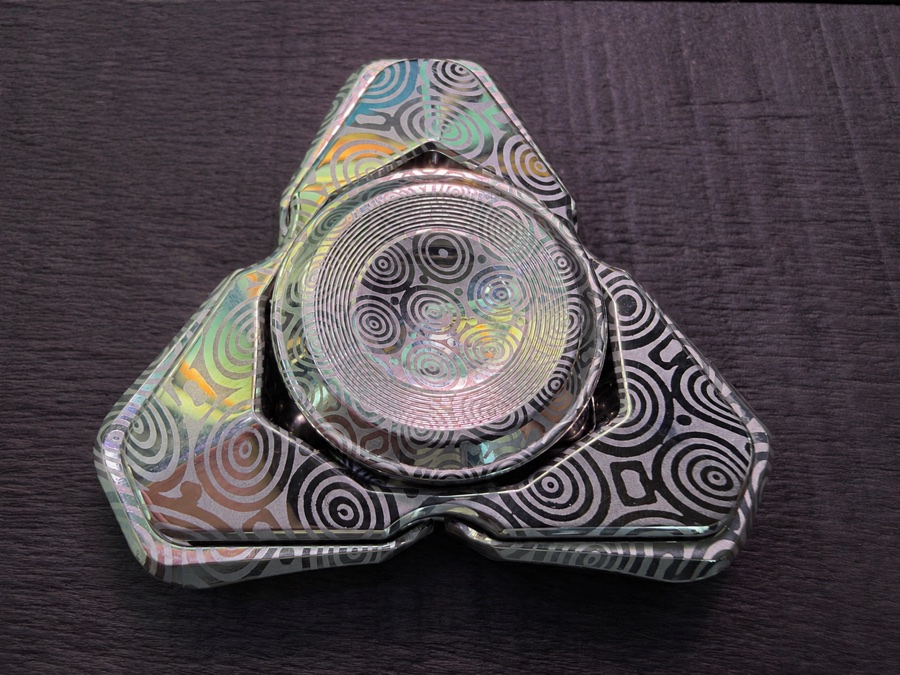
A branded powder-metallurgy stainless patterned steel; the maker’s DS93X family pairs RWL34 and PMC27.
See devices with this material (0)
BlueTongue Damasteel on a SUAN Q-S spinner from the collection. The pattern and color show this particular finish. · Owner photograph, AI-retouched for display Another example: Damasteel Hakkapella on a Victorinox Farmer X Alox Damast Limited Edition 2024 blade. · The Damast steel pattern on my 2024 Limited Edition Victorinox, by spelio · CC BY-NC-SA 2.0 · noncommercial
Relative cost $$$$
Density (g/cm³) ≈7.8 (steel-class; verify exact product)
Hardness / wear Heat-treatment dependent; consult the product datasheet rather than assigning a single hardness.
Corrosion / finish Stainless grades are corrosion resistant, not corrosion-proof. Sources: Damasteel: stainless Damascus steel · Damasteel: DS93X datasheet
Bonded contrasting metals reveal a wood-grain pattern. It is a technique, not a fixed alloy.
See devices with this material (0)
Copper-rich Mokume-gane made with silver, copper and brass. Other combinations vary. · Mauro Cateb · Wikimedia Commons · CC BY-SA 3.0 · Resized
Relative cost $$$$
Density (g/cm³) Unknown for unspecified composition
Hardness / wear Hardness and density depend on layers and their proportions; a copper-rich piece is not representative of all mokume.
Corrosion / finish Copper alloys may darken with handling; each layer and any intentional patina can age differently. Sources: Metropolitan Museum of Art: Mokume-gane
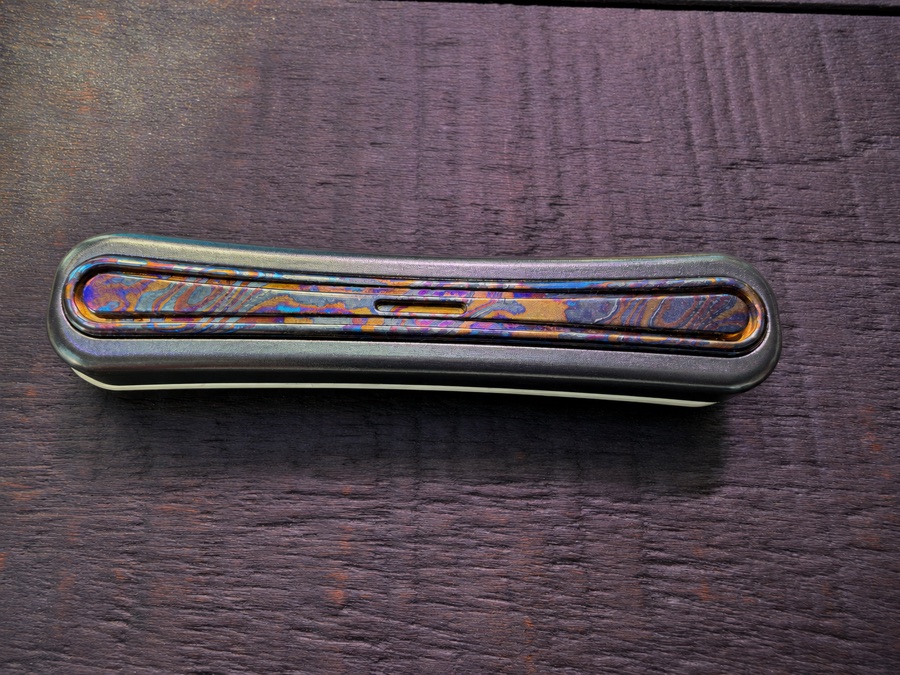
Patterned titanium-alloy layers; color and pattern are characteristic, but a record label does not establish the billet supplier.
See devices with this material (0)
Mokuti is the patterned insert on the BRAIN EDC Snake Mini 2.0. The surrounding body is zirconium. · Owner photograph, AI-retouched for display Another example: Anodized Mokuti on the patterned handle of a Böker Ansø 67. The plain blade is a different material. · Boker Anso 67 Mokuti Ltd Edition, by toybot studios · CC BY-NC 2.0 · noncommercial
Relative cost $$$$$
Density (g/cm³) ≈4.5 (Airtable estimate for titanium-based versions)
Hardness / wear No single hardness; titanium grades, layer proportions and finishing vary.
Corrosion / finish Titanium-based layers are generally corrosion resistant; that does not guarantee an unchanging decorative finish. Sources: Futuron Forge: layered titanium and zirconium examples
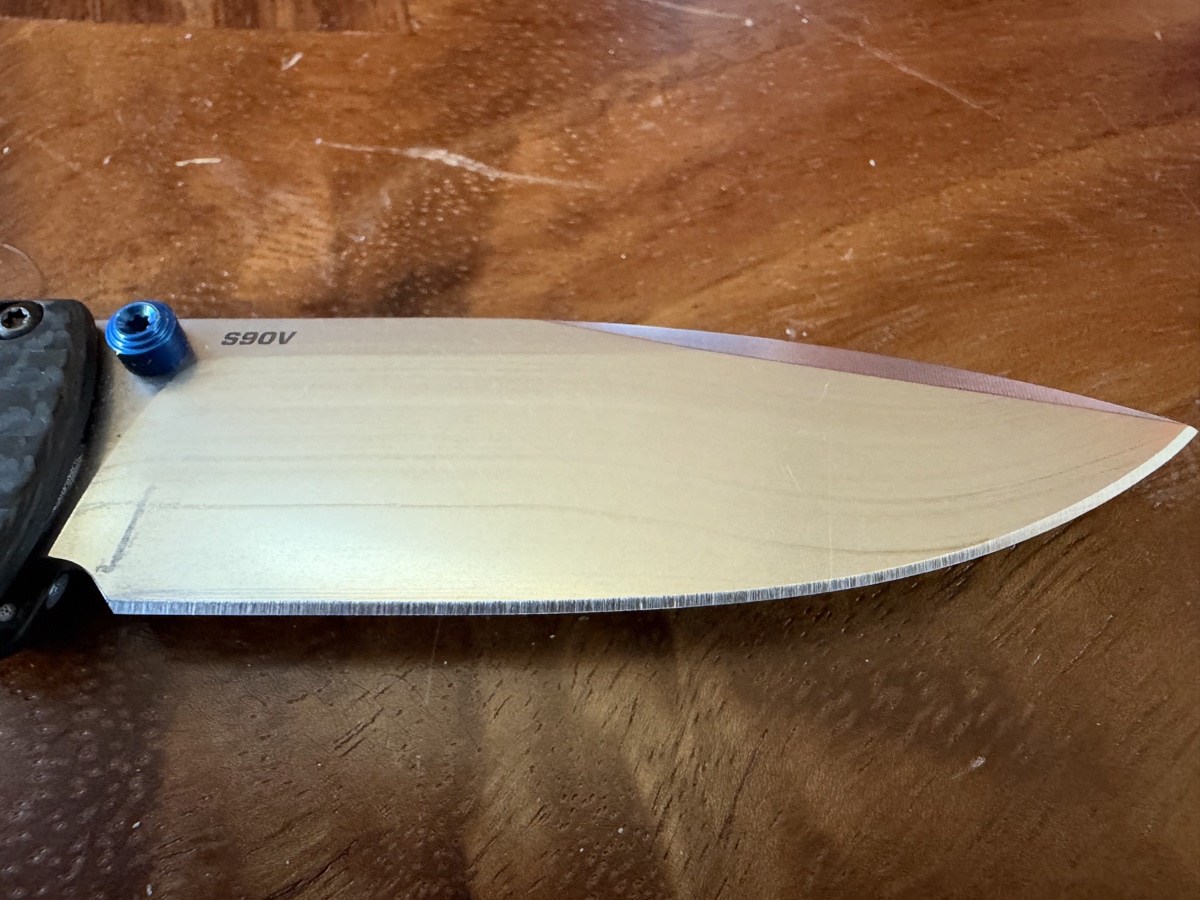
CPM S90V is a high-vanadium stainless tool steel designed for wear resistance.
See devices with this material (0)
The satin blade of this Benchmade Bugout 535-3 is stamped S90V. The carbon fiber handle is not the steel sample. · Owner photograph
Relative cost $$$
Density (g/cm³) 7.4 (Crucible/Niagara datasheet)
Hardness / wear Vanadium carbides contribute to wear resistance; part hardness depends on heat treatment.
Corrosion / finish Stainless, not stain-proof. Datasheet performance cannot establish treatment of a specific part. Sources: Crucible/Niagara: CPM S90V datasheet
Iron-based corrosion-resistant alloys; dense compared with aluminum and titanium.
See 7 devices with this material
316L stainless steel plate, one representative grade. · Chhajedsteel2025 · Wikimedia Commons · CC0 1.0 · Resized
Relative cost $
Density (g/cm³) ≈7.8–7.9 (representative steel range; 304 example 7.9)
Hardness / wear Hardness spans grades and heat-treatment states. A 304 example is not proof the item is grade 304.
Corrosion / finish Chromium passivation helps resist corrosion; exposure and grade matter. Sources: Outokumpu: Core stainless range datasheet
In EDC, the label often refers to exposed filament patterns in a copper-based composite; industrial NbTi/copper wire is an example.
See devices with this material (0)
Python-patterned SUAN Q-S from the collection. Note the honeycomb-like pattern; the photo does not establish the billet’s exact composition. · Owner photograph, AI-retouched for display
Relative cost $$$$$
Density (g/cm³) Unknown for unspecified composition
Hardness / wear The matrix and filaments can react differently to wear; billet composition and density are not verified.
Corrosion / finish Copper phases can patinate. The name does not imply room-temperature superconductivity or identify the exact filament alloy. A patterned titanium laminate label associated with Alpha Knife Supply. Black Timascus is distinct; don't infer its presence from a generic label.
See devices with this material (0)
Bishop spinning top from the collection. The colorful striped plates are Timascus; the other parts are not the material sample. · Owner photograph, AI-retouched for display
Relative cost $$$$$
Density (g/cm³) ≈4.5 (Airtable titanium-laminate estimate, not all variants)
Hardness / wear No single hardness; layer grades and proportions are not known from the gallery name.
Corrosion / finish Titanium layers generally resist corrosion; appearance depends on the chosen surface treatment. Sources: Alpha Knife Supply: materials catalog
Light and strong for its weight; the unqualified label does not identify an alloy grade.
See 2 devices with this material
Machined titanium cylinder, shown without color anodizing. · Jurii · Wikimedia Commons · CC BY 3.0 · Resized
Relative cost $$
Density (g/cm³) 4.506 (pure Ti)
Hardness / wear Strength and hardness depend on alloy and processing; no default Grade 5 assumption.
Corrosion / finish A passive oxide helps resist corrosion. Color/finish and scratch behavior vary. Sources: Royal Society of Chemistry: Titanium
Very high density makes tungsten an option for compact heft; it does not by itself predict spin time.
See devices with this material (0)
Sintered tungsten sample, not tungsten carbide or a specified EDC alloy. · Jurii · Wikimedia Commons · CC BY 3.0 · Resized
Relative cost $$$
Density (g/cm³) ≈19.3 (pure W)
Hardness / wear Heaviness is not the same as hardness. Tungsten metal, heavy alloy, and tungsten carbide are different materials.
Corrosion / finish Do not infer composition, impact resistance or corrosion performance for a particular piece from the element label. Sources: Royal Society of Chemistry: Tungsten
A metal with more heft than titanium, often seen in EDC with a dark oxide finish.
See 8 devices with this material
Black-finished zirconium on a ForeverSpin top. The bass is the background, not the sample. · Johannes Weber · Wikimedia Commons · CC BY 2.0 · Resized and framed on the top
Relative cost $$$
Density (g/cm³) 6.52 (pure Zr)
Hardness / wear The oxide finish is a surface layer, not a measurement of the bulk material. Scratch behavior depends on finish.
Corrosion / finish Zirconium can form a protective oxide; avoid claims of immunity to chemicals or wear. Sources: Royal Society of Chemistry: Zirconium
Patterned laminate using zirconium and titanium layers. The word Damascus describes the visual layering, not steel.
See devices with this material (0)
ZircuTi spinner from the collection. The colorful bands illustrate one finish. · See the ZircuTi LAUTIE Noiz-Nano for another example · Owner photograph, AI-retouched for display
Relative cost $$$$$
Density (g/cm³) ≈5.5 (Airtable estimate); one supplier example ≈4.99
Hardness / wear Composition and surface finish vary; no universal density or hardness applies.
Corrosion / finish Oxide and color behavior can differ by layer. No blanket corrosion immunity. Sources: LAUTIE: ZircuTi construction · Futuron Forge: example laminate datasheet
 Brass (Cu + Zn)
 Copper (Cu)
 Damascus Steel
 Damasteel
 Mokume (Mokume-gane)
 Mokuti (Ti Damascus)
 S90V Steel
 Stainless Steel (SS)
 Superconductor
 Timascus (Ti Damascus)
 Titanium (Ti)
 Tungsten (W)

 Zircuti (Zr + Ti Damascus)

