Material reference
Metallurgy Compare the metals and related materials in the collection. Select a name to jump to its profile.
Density is approximate and depends on the grade or composition. For ranges, density sorting uses the lower end. Relative cost uses the collection’s $–$$$$$ scale, not market pricing. Hardness is not ranked across test scales.
Swipe to compare all columns.
Material Family Density (g/cm³) Relative cost Hardness / wear Corrosion / finish Element / alloy family 2.70 (pure Al) $ Pure aluminum is relatively soft; alloy and temper can raise strength. A passive oxide protects the surface. Hard anodizing is a surface treatment, not bulk hardness. Alloy family ≈8.53 (C26000 example) $ Hardness and strength vary by zinc content, grade and temper. Brass can tarnish and develop patina; the environment matters. Element 8.96 (pure Cu) $$ Pure copper is relatively soft; temper and work hardening change its response to dents and scratches. Patina is expected under many exposure conditions and is not a fixed color or timeline. Patterned steel family ≈7.8 (Airtable steel-family baseline) $$$ No single hardness. Grade pairing and heat treatment govern hardness and toughness. Carbon and stainless varieties behave differently; the name alone does not establish corrosion resistance. Branded stainless patterned steel ≈7.8 (steel-class; verify exact product) $$$$ Heat-treatment dependent; consult the product datasheet rather than assigning a single hardness. Stainless grades are corrosion resistant, not corrosion-proof. Patterned metal laminate Varies / not listed $$$$ Hardness and density depend on layers and their proportions; a copper-rich piece is not representative of all mokume. Copper alloys may darken with handling; each layer and any intentional patina can age differently. Titanium laminate ≈4.5 (Airtable estimate for titanium-based versions) $$$$$ No single hardness; titanium grades, layer proportions and finishing vary. Titanium-based layers are generally corrosion resistant; that does not guarantee an unchanging decorative finish. Powder-metallurgy stainless steel 7.4 (Crucible/Niagara datasheet) $$$ Vanadium carbides contribute to wear resistance; part hardness depends on heat treatment. Stainless, not stain-proof. Datasheet performance cannot establish treatment of a specific part. Alloy family ≈7.8–7.9 (representative steel range; 304 example 7.9) $ Hardness spans grades and heat-treatment states. A 304 example is not proof the item is grade 304. Chromium passivation helps resist corrosion; exposure and grade matter. Multimetal composite Varies / not listed $$$$$ The matrix and filaments can react differently to wear; billet composition and density are not verified. Copper phases can patinate. The name does not imply room-temperature superconductivity or identify the exact filament alloy. Branded patterned titanium family ≈4.5 (Airtable titanium-laminate estimate, not all variants) $$$$$ No single hardness; layer grades and proportions are not known from the gallery name. Titanium layers generally resist corrosion; appearance depends on the chosen surface treatment. Element / alloy family 4.506 (pure Ti) $$ Strength and hardness depend on alloy and processing; no default Grade 5 assumption. A passive oxide helps resist corrosion. Color/finish and scratch behavior vary. Element / alloy family ≈19.3 (pure W) $$$ Heaviness is not the same as hardness. Tungsten metal, heavy alloy, and tungsten carbide are different materials. Do not infer composition, impact resistance or corrosion performance for a particular piece from the element label. Element / alloy family 6.52 (pure Zr) $$$ The oxide finish is a surface layer, not a measurement of the bulk material. Scratch behavior depends on finish. Zirconium can form a protective oxide; avoid claims of immunity to chemicals or wear. Zirconium–titanium laminate ≈5.5 (Airtable estimate); one supplier example ≈4.99 $$$$$ Composition and surface finish vary; no universal density or hardness applies. Oxide and color behavior can differ by layer. No blanket corrosion immunity.
Look side by side Both can show layered patterns. This example contrasts copper-rich Mokume-gane with a zirconium–titanium laminate. Color and pattern alone don’t identify the material.
Look closer
Material profiles A light metal used where low carry weight matters.
See 1 device with this material
Aluminum foil, a familiar rolled finish. · Jurii · Wikimedia Commons · CC BY 3.0 · Resized
Relative cost $
Density (g/cm³) 2.70 (pure Al)
Hardness / wear Pure aluminum is relatively soft; alloy and temper can raise strength.
Corrosion / finish A passive oxide protects the surface. Hard anodizing is a surface treatment, not bulk hardness. Sources: Royal Society of Chemistry: Aluminium
Copper-zinc alloys with golden color and a heavier feel than titanium.
See 8 devices with this material
Brass is the center machined cube. The other pieces are zinc and copper. · Splarka · Wikimedia Commons · Public domain · Resized
Relative cost $
Density (g/cm³) ≈8.53 (C26000 example)
Hardness / wear Hardness and strength vary by zinc content, grade and temper.
Corrosion / finish Brass can tarnish and develop patina; the environment matters. Sources: Copper Development Association: C26000
Dense, reddish metal that develops a visible patina with exposure and handling.
See 5 devices with this material
Copper nugget, before a polished EDC finish. · Jurii · Wikimedia Commons · CC BY 3.0 · Resized
Relative cost $$
Density (g/cm³) 8.96 (pure Cu)
Hardness / wear Pure copper is relatively soft; temper and work hardening change its response to dents and scratches.
Corrosion / finish Patina is expected under many exposure conditions and is not a fixed color or timeline. Sources: Royal Society of Chemistry: Copper
A broad label for patterned steel. Modern pattern-welded products use layers with visible contrast.
See 2 devices with this material
Modern 1080 / 15N20 pattern-welded Damascus, not historical wootz or Damasteel. · Fluzwup · Wikimedia Commons · CC0 1.0 · Resized
Relative cost $$$
Density (g/cm³) ≈7.8 (Airtable steel-family baseline)
Hardness / wear No single hardness. Grade pairing and heat treatment govern hardness and toughness.
Corrosion / finish Carbon and stainless varieties behave differently; the name alone does not establish corrosion resistance. Sources: Damasteel: traditional versus powder-based process
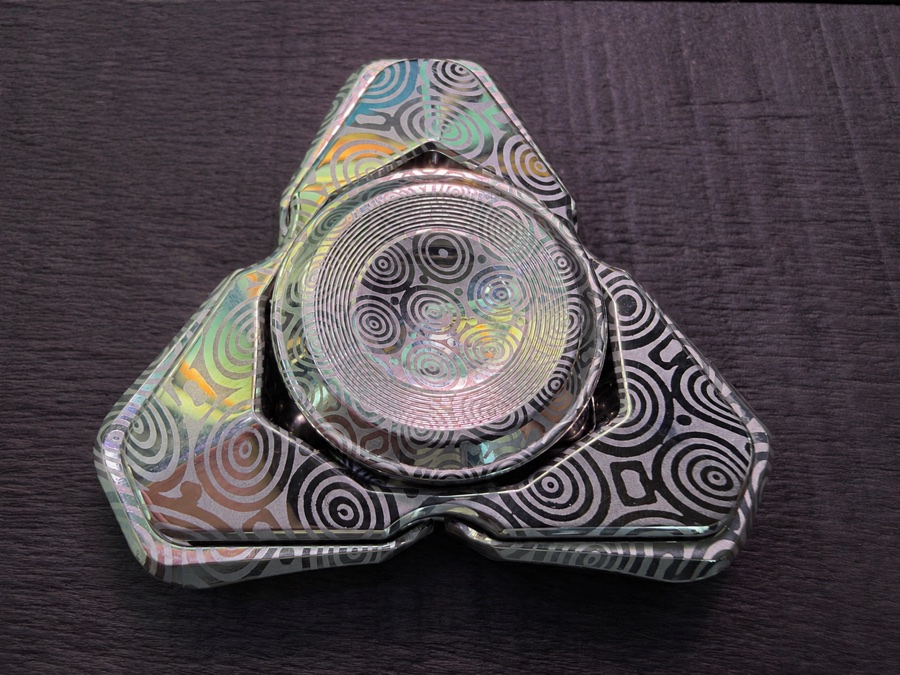
A branded powder-metallurgy stainless patterned steel; the maker’s DS93X family pairs RWL34 and PMC27.
See 1 device with this material
BlueTongue Damasteel on a SUAN Q-S spinner from the collection. The pattern and color show this particular finish. · Owner photograph, AI-retouched for display Another example: Damasteel Hakkapella on a Victorinox Farmer X Alox Damast Limited Edition 2024 blade. · The Damast steel pattern on my 2024 Limited Edition Victorinox, by spelio · CC BY-NC-SA 2.0 · noncommercial
Relative cost $$$$
Density (g/cm³) ≈7.8 (steel-class; verify exact product)
Hardness / wear Heat-treatment dependent; consult the product datasheet rather than assigning a single hardness.
Corrosion / finish Stainless grades are corrosion resistant, not corrosion-proof. Sources: Damasteel: stainless Damascus steel · Damasteel: DS93X datasheet
Bonded contrasting metals reveal a wood-grain pattern. It is a technique, not a fixed alloy.
See 3 devices with this material
Copper-rich Mokume-gane made with silver, copper and brass. Other combinations vary. · Mauro Cateb · Wikimedia Commons · CC BY-SA 3.0 · Resized
Relative cost $$$$
Density (g/cm³) Unknown for unspecified composition
Hardness / wear Hardness and density depend on layers and their proportions; a copper-rich piece is not representative of all mokume.
Corrosion / finish Copper alloys may darken with handling; each layer and any intentional patina can age differently. Sources: Metropolitan Museum of Art: Mokume-gane
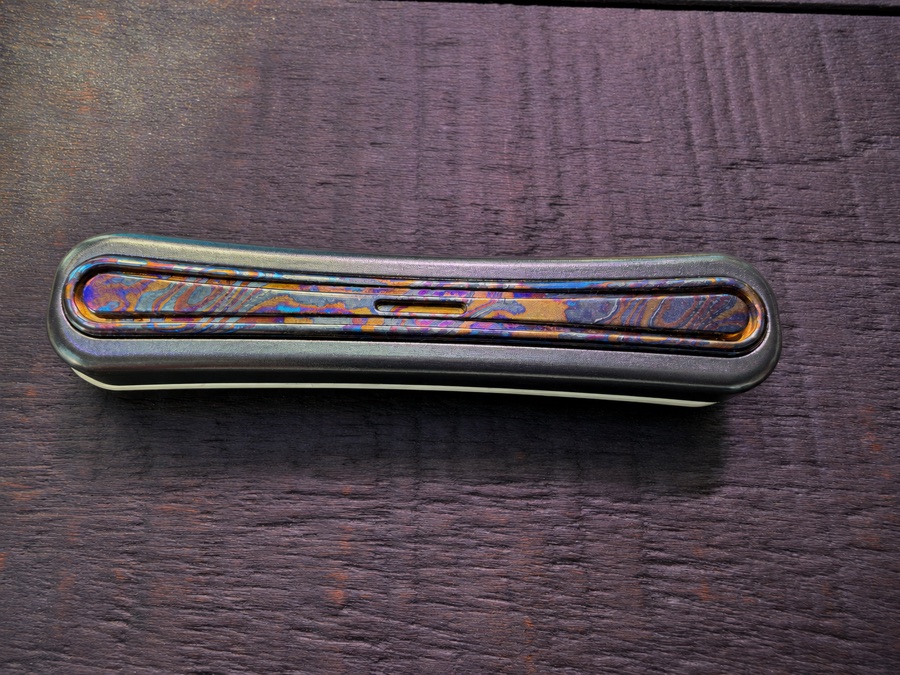
Patterned titanium-alloy layers; color and pattern are characteristic, but a record label does not establish the billet supplier.
See 3 devices with this material
Mokuti is the patterned insert on the BRAIN EDC Snake Mini 2.0. The surrounding body is zirconium. · Owner photograph, AI-retouched for display Another example: Anodized Mokuti on the patterned handle of a Böker Ansø 67. The plain blade is a different material. · Boker Anso 67 Mokuti Ltd Edition, by toybot studios · CC BY-NC 2.0 · noncommercial
Relative cost $$$$$
Density (g/cm³) ≈4.5 (Airtable estimate for titanium-based versions)
Hardness / wear No single hardness; titanium grades, layer proportions and finishing vary.
Corrosion / finish Titanium-based layers are generally corrosion resistant; that does not guarantee an unchanging decorative finish. Sources: Futuron Forge: layered titanium and zirconium examples
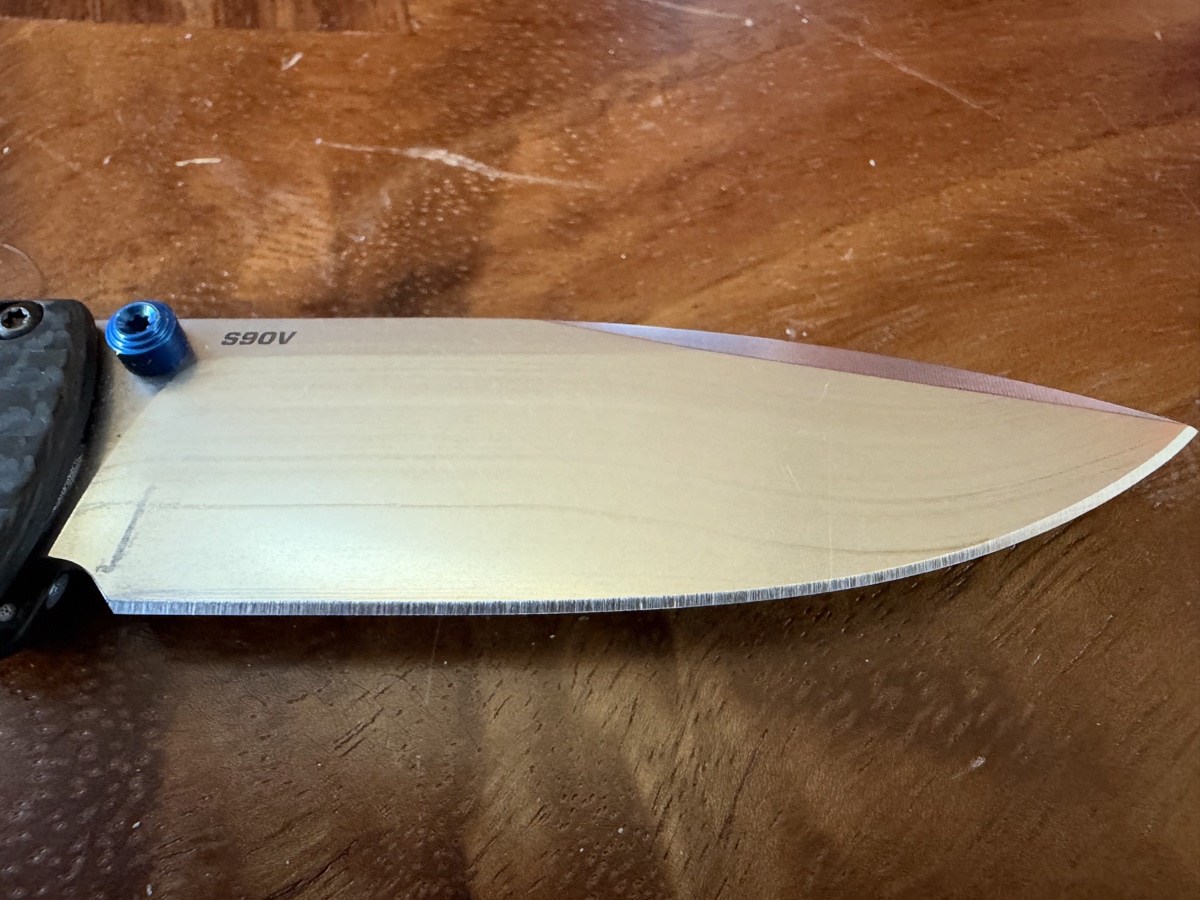
CPM S90V is a high-vanadium stainless tool steel designed for wear resistance.
See 1 device with this material
The satin blade of this Benchmade Bugout 535-3 is stamped S90V. The carbon fiber handle is not the steel sample. · Owner photograph
Relative cost $$$
Density (g/cm³) 7.4 (Crucible/Niagara datasheet)
Hardness / wear Vanadium carbides contribute to wear resistance; part hardness depends on heat treatment.
Corrosion / finish Stainless, not stain-proof. Datasheet performance cannot establish treatment of a specific part. Sources: Crucible/Niagara: CPM S90V datasheet
Iron-based corrosion-resistant alloys; dense compared with aluminum and titanium.
See 11 devices with this material
316L stainless steel plate, one representative grade. · Chhajedsteel2025 · Wikimedia Commons · CC0 1.0 · Resized
Relative cost $
Density (g/cm³) ≈7.8–7.9 (representative steel range; 304 example 7.9)
Hardness / wear Hardness spans grades and heat-treatment states. A 304 example is not proof the item is grade 304.
Corrosion / finish Chromium passivation helps resist corrosion; exposure and grade matter. Sources: Outokumpu: Core stainless range datasheet
In EDC, the label often refers to exposed filament patterns in a copper-based composite; industrial NbTi/copper wire is an example.
See 1 device with this material
Python-patterned SUAN Q-S from the collection. Note the honeycomb-like pattern; the photo does not establish the billet’s exact composition. · Owner photograph, AI-retouched for display
Relative cost $$$$$
Density (g/cm³) Unknown for unspecified composition
Hardness / wear The matrix and filaments can react differently to wear; billet composition and density are not verified.
Corrosion / finish Copper phases can patinate. The name does not imply room-temperature superconductivity or identify the exact filament alloy. A patterned titanium laminate label associated with Alpha Knife Supply. Black Timascus is distinct; don't infer its presence from a generic label.
See 2 devices with this material
Bishop spinning top from the collection. The colorful striped plates are Timascus; the other parts are not the material sample. · Owner photograph, AI-retouched for display
Relative cost $$$$$
Density (g/cm³) ≈4.5 (Airtable titanium-laminate estimate, not all variants)
Hardness / wear No single hardness; layer grades and proportions are not known from the gallery name.
Corrosion / finish Titanium layers generally resist corrosion; appearance depends on the chosen surface treatment. Sources: Alpha Knife Supply: materials catalog
Light and strong for its weight; the unqualified label does not identify an alloy grade.
See 15 devices with this material
Machined titanium cylinder, shown without color anodizing. · Jurii · Wikimedia Commons · CC BY 3.0 · Resized
Relative cost $$
Density (g/cm³) 4.506 (pure Ti)
Hardness / wear Strength and hardness depend on alloy and processing; no default Grade 5 assumption.
Corrosion / finish A passive oxide helps resist corrosion. Color/finish and scratch behavior vary. Sources: Royal Society of Chemistry: Titanium
Very high density makes tungsten an option for compact heft; it does not by itself predict spin time.
See 6 devices with this material
Sintered tungsten sample, not tungsten carbide or a specified EDC alloy. · Jurii · Wikimedia Commons · CC BY 3.0 · Resized
Relative cost $$$
Density (g/cm³) ≈19.3 (pure W)
Hardness / wear Heaviness is not the same as hardness. Tungsten metal, heavy alloy, and tungsten carbide are different materials.
Corrosion / finish Do not infer composition, impact resistance or corrosion performance for a particular piece from the element label. Sources: Royal Society of Chemistry: Tungsten
A metal with more heft than titanium, often seen in EDC with a dark oxide finish.
See 35 devices with this material
Black-finished zirconium on a ForeverSpin top. The bass is the background, not the sample. · Johannes Weber · Wikimedia Commons · CC BY 2.0 · Resized and framed on the top
Relative cost $$$
Density (g/cm³) 6.52 (pure Zr)
Hardness / wear The oxide finish is a surface layer, not a measurement of the bulk material. Scratch behavior depends on finish.
Corrosion / finish Zirconium can form a protective oxide; avoid claims of immunity to chemicals or wear. Sources: Royal Society of Chemistry: Zirconium
Patterned laminate using zirconium and titanium layers. The word Damascus describes the visual layering, not steel.
See 7 devices with this material
ZircuTi spinner from the collection. The colorful bands illustrate one finish. · See the ZircuTi LAUTIE Noiz-Nano for another example · Owner photograph, AI-retouched for display
Relative cost $$$$$
Density (g/cm³) ≈5.5 (Airtable estimate); one supplier example ≈4.99
Hardness / wear Composition and surface finish vary; no universal density or hardness applies.
Corrosion / finish Oxide and color behavior can differ by layer. No blanket corrosion immunity. Sources: LAUTIE: ZircuTi construction · Futuron Forge: example laminate datasheet
 Brass (Cu + Zn)
 Copper (Cu)
 Damascus Steel
 Damasteel
 Mokume (Mokume-gane)
 Mokuti (Ti Damascus)
 S90V Steel
 Stainless Steel (SS)
 Superconductor
 Timascus (Ti Damascus)
 Titanium (Ti)
 Tungsten (W)

 Zircuti (Zr + Ti Damascus)

